The programme gives training in solving real-life economic problems via the application of state-of-the-art economic analysis techniques with a special focus on micro-and macroeconomic theory.
Cooperation with the Bank of Estonia and Swedbank provides internship possibilities, an award for the best thesis and job opportunities after graduation.
Studying is flexible and allows you to reconcile work and university life.
Graduates can follow a career as analysts in banks, public sector organisations, consulting firms and international companies. About 80% of our alumni work in Estonia.
Study in the University of Tartu Delta Centre which brings together a vibrant community of students, researchers and innovators in the fields of computer science, business and economics, mathematics and statistics.
Level of study: Master’s Study language: English Duration and credits: 2 years, 120 ECTS Form of study: Regular study Location: Tartu or 1st year in Tartu and 2nd in Ghent Student places: 30 Tuition fee: Non-EU/EEA citizens: €4,800 per year, EU/EEA/Swiss citizens: €2,400 per year Admission 2026: Jan 2 – 15 Mar 2026 Admission results: April 30 Academic year starts: August 31
Quantitative Economics gives you strong preparation in contemporary economic theory and econometric analysis methods, enabling them to analyse and forecast economic processes. This programme gives you training in solving real-life economic problems via the application of state-of-the-art economic analysis techniques with a special focus on micro-and macroeconomic theory.
You can choose if you’d like to study two years in Tartu, at one of the most modern innovation centre in Delta or from the academic year 2024/25 students can spend their second year at Ghent University in Belgium (read more about the university) and receive two diplomas.
What will you get?
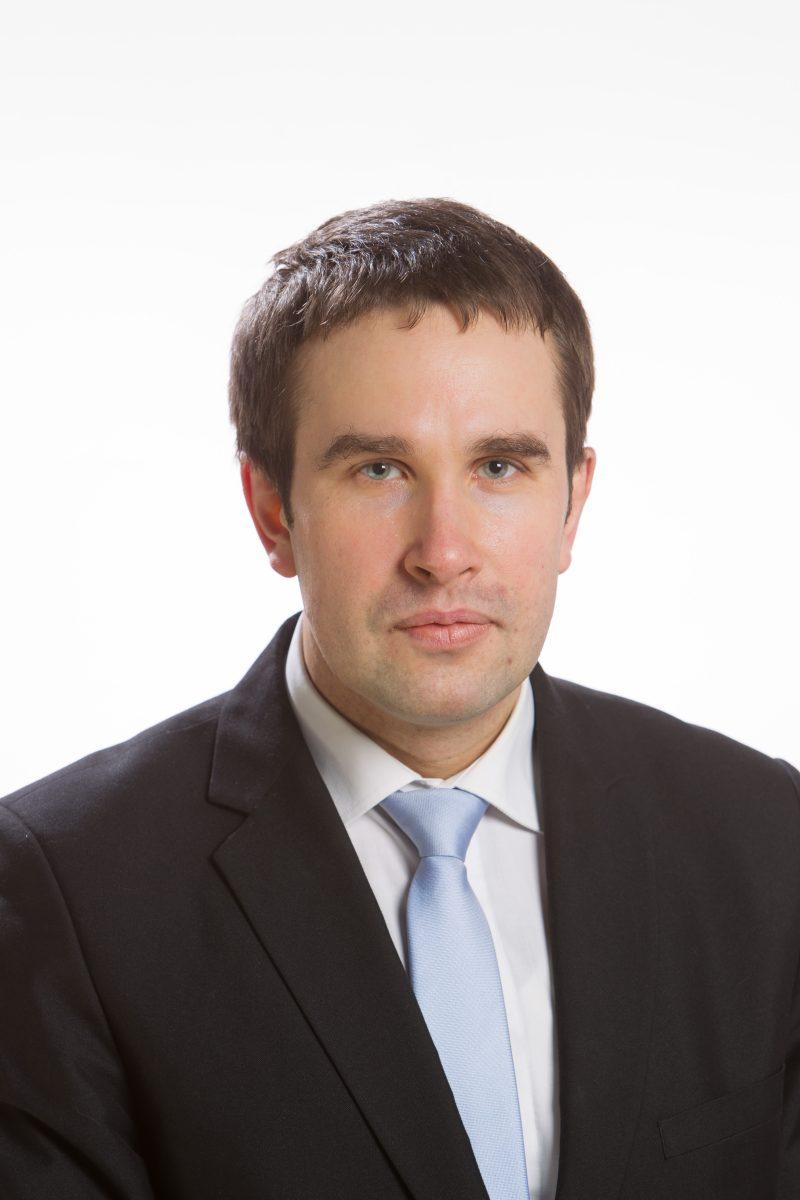
The programme offers internationally competitive master’s-level economic education. The teaching staff will involve graduates of the high-standing international economics PhD programmes and leading economists of Estonia. Due to close international contacts and active research activities at the national and international levels at the faculty, students can get actual research experience or apprenticeship training in Estonian financial and public sector institutions. —Jaan Masso, Programme Director
After completing the programme, the student:
knows the main concepts in economics and has acquired the skills of making critical assessments over the applicability of these concepts;
has acquired the ability to apply both micro-and macroeconomic models for analysing the problems which arise in economic practice;
knows how to verbally, graphically, mathematically and empirically analyse and forecast both the behaviour of economic agents and also the impact of governmental policies;
has gained the experience of conducting scientific research and solving real-life economic related problems in practice.
Studies
From the academic year 2024/25, you can choose if you’d like to study two years in Tartu, at one of the most modern innovation centre in Delta or spend the second year at Ghent University in Belgium (read more about the university) and receive two diplomas.
Double degree programme with Ghent University
Ghent University (Belgium) and the University of Tartu have established a double degree master’s programme. The programme starts in the academic year 2024/2025.
Since the establishment of the double degree programme, you can choose between two specialisations and two study tracks:
I Economics and Data Analysis – you will study at the University of Tartu for two years. However, you still have the option (but no obligation) to study abroad with any exchange programme. This specialisation has a strong focus on various data analysis methods. You will receive a diploma from the University of Tartu.
II Economic Theory and Data Analysis – you will study your first year at the University of Tartu and your second year at Ghent University. Thus, mobility is an integrated part of the two-year master’s programme. In addition to data analyses, this specialisation also focuses on financial markets and economic policy topics. The students choosing this study track do not need to pay extra for their studies at Ghent University. You will receive two diplomas with the following degrees:
Master of Arts in Quantitative Economics (University of Tartu)
Master of Science in Economics (Ghent University)
The students will be selected for their study track at the time of admission to the master’s programme. Upon submitting your application in DreamApply, please indicate your preferred study track: Tartu (I) or Tartu and Ghent (II). Even if you are not admitted to your chosen study track, you will still be considered for the other alternative study track.
Ghent University is one of the major universities in Belgium and belongs to the top 100 in the ranking of world universities. Ghent University partners with the University of Tartu within the ENLIGHT network, and the two universities have cooperated in economics studies since 2021 in the Erasmus Mundus Joint Master in Economics of Globalization and European Integration (EGEI). Read more about Ghent University here and theeconomicsdoubledegree program here.
Scholarships
Three monthly scholarships will be awarded to the highest-ranked applicants of €600 during the first year of the master’s studies for ten months (September-June). Applicants are considered for it automatically at the time of admission.
Facilities
The studies take place in the University of Tartu Delta Centre. Opened in 2020, the Delta Centre comprises academic and research and entrepreneurship buildings and brings together more than 3000 students, lecturers, researchers, and company development employees. Read more about the University of Tartu Delta Centre here.
The academic and research building accommodates the Institute of Computer Sciences, the Institute of Mathematics and Statistics, the Faculty of Economics and Business Administration, the Centre for Entrepreneurship and Innovation and some laboratories of the Institute of Technology.
Explore Tartu, the School of Business Administration and Economics, and the student dormitories through the university’s virtual tour.
Internship
Is an internship mandatory? What kind of internships is it possible to get?
The internship is an integral part of the MA Quantitative Economics programme studies. An internship course of 3 ECTS is part of the elective modules.
During the practical training, the student is expected to gain economic research experience by applying the theoretical knowledge obtained during the coursework to the empirical or theoretical study of a specific economic problem. The internship may comprise very different kinds of activities: economic analysis in the central bank research department, work in a data analytics company, work in a ministry or other public sector organization, and helping to establish a start-up company. In the practical training, some linkage with quantitative analysis and/or economics is expected, i.e. we do not expect academic economic research in a narrow sense, but internship may include, e.g. 1) writing applied reports; 2) collecting information; 3) making data accessible for research and analysis; 4) statistical data analysis; 5) collecting literature and writing literature reviews.
When do students generally do their internship?
Most of the master’s students have taken an internship in the summer month after the 1st year of their studies. It is logical to apply for an internship after the basic skills in economic theory and econometric analysis have been acquired in the 1st year of the master’s studies courses. Yet, we encourage the students to take internships outside of the summer months, e.g. in the Fall or Winter of the 2nd year of the master’s studies. A few students have been offered a permanent position at the end of the internship.
How do students find internships? Does the university help with that?
Yes, the University of Tartu helps the students to find an internship. In particular, we have provided the students with a list of possible places (companies and other organizations) for practical training in Estonia and the other Baltic States. The internship mediation page FUTULAB has also been created. However, students have to apply for the internship themselves. The internship can be taken in any country, given that it matches the profile of the study curriculum. One can apply for funding from the Erasmus+ programme when taking an internship abroad. The University of Tartu has also offered some internship opportunities, either as part of the work for some research projects of the School of Economics and Business Administration or at the University of Tartu Centre for Applied Social Sciences.
Examples of companies where students have done their internships during the last few years
Central banks: Eesti Pank (central bank of Estonia), Center for Excellence in Finance and Economic Research (CEFER), established by the Bank of Lithuania and Vilnius University
Think-tanks: CENTAR (Estonia), PRAXIS (Estonia), BICEPS (Latvia), PMCG (Georgia), CASS (Estonia)
Financial institutions – both commercial banks and Fintech companies, like Swedbank (Estonia), Bigbank (Estonia), Redgate capital (Estonia), Friendly Finance Group (Estonia), Scorewise (Estonia), Dataminer (Estonia), LHV Bank (Estonia), WISE (Estonia).
Manufacturing companies – Ericsson Eesti AS, Stora Enso Eesti AS.
Public sector institutions – Estonian Unemployment Insurance Foundation, Ministry of Economic Affairs and Communications, Foresight Centre of the Riigikogu (Parliament of Estonia), Estonian Development Fund, Enterprise Estonia (Estonia).
Universities: University of Tartu (Estonia), CERGE-EI (Czech Republic).
Studies abroad
There are plenty of exchange opportunities to study abroad for a semester or full year using the Erasmus+ programme. To enable the studies abroad to contribute to the fulfilment of the curriculum, in the curriculum, one of the three elective modules is the Mobility Module. The students must take master-level economics courses for at least 15 ECTS during the semester abroad, as previously agreed with the programme manager. Below are listed a few excellent institutions the MA Quantitative Economics students have previously studied. The complete list of possible institutions for studies abroad can be found here.
Ghent University (Belgium) is one of the major universities in Belgium and belongs to the top 100 in the world universities rankings. Ghent University partners with the University of Tartu within the ENLIGHT network. In economics studies, both Ghent University and the University of Tartu participate in the Erasmus Mundus Joint Master in Economics of Globalization and European Integration (EGEI).
Kiel University (CAU, Germany) was founded in 1665 and is the oldest, largest and best-known university in the German state of Schleswig-Holstein. Kiel Institute for the World Economy hosts the Kiel Advanced Studies program(ASP), where many alumni and instructors of the MA Quantitative Economics program have studied. ASP is a 1-year program taught by world-renowned professors from leading universities from across the globe who go to Kiel to teach their areas of expertise in intensive one or two-week courses.
University of Konstanz (Germany) has, since its foundation in 1966, distinguished itself through its top-level research, excellence in teaching and studies, internationality and interdisciplinary collaboration. This vision can be seen in its architecture, where the university campus’s short distances and interlinked buildings sustain an environment that facilitates communication, interlinks scientific disciplines and advances a culture of creative collaboration. The university is located in the southernmost part of Germany, next to the border with Austria and Switzerland, in a very picturesque landscape.
University of Bologna (Italy), one of the oldest universities in Europe, considers its history to be as far back as 1088. In addition to its history, the University of Bologna ranks in the top 15 of the first 200 universities worldwide.
After graduation
The objective of the master’s programme in Quantitative Economics is to prepare highly qualified analysts for government agencies, banks, international organisations and consultancy firms, filling top positions that require a detailed understanding and application of economic models and econometric methods.
Our graduates work in diverse sectors, like various financial companies, consultancy firms, think tanks, multinational companies, and universities. Examples of employers include Google (Ireland), Bolt (Estonia), Finnair (Finland, Estonia), think-tanks (PMCG in Georgia, Centar and Praxis in Estonia), universities (Tbilisi State University in Georgia, University of Tartu, University of Cambridge in UK), banks (Swedbank, Bigbank, Luminor in Estonia), Fintechs (Wise, Fortumo).
As to the occupations and job tasks, many graduates are working as different kinds of data analysts. That is supported on the one hand by a strong emphasis on statistics, econometrics and data science courses during the master’s studies, and on the other hand by the high demand for data scientists in the labour market.
To provide the basis of the fundamental mathematical and statistical methods used in economics.
II module
Economic Models (43 ECTS)
To deeper students’ knowledge in different areas of economic models and their applicability in practice. To give the students an opportunity to affirm the acquired skills and experience through practice in field of economic analysis.
III module
Elective Module (15 ECTS)
Student must select and complete one of the three submodules: Special Topics in Economics, Financial and Actuarial Mathematics or Mobility Module.
IV module
Optional courses (6 ECTS)
To give a student opportunity to complement his/her knowledge and develop skills in various subjects. Optional courses can be taken from other curricula or from other universities curricula.
V module
Master´s Thesis Module (20 ECTS)
The master thesis involves analysis of a particular economic issue written in the form of a scientific research article.
Nationality: Ukrainian Previous education: Economic Theory, National University of Kyiv Mohyla Academy, Ukraine
What did you get from MA in Quantitative Economics? It has developed my analytical skills, understanding of quantitative methods and how to work with data. It gave me a good background for my current position as a business analyst.
Exchange, Research and Internship Experience Erasmus exchange in Bologna University (Rimini campus) and Internship at Praxis. I was working on research focusing on absenteeism and presenteeism, which involved building multilevel models.
Current position: Business Analyst, Finnair Business Services, in Tartu, Estonia
Diana Gabrielyan
Nationality: Armenian Previous education: Informatics and Applied Mathematics, Yerevan State University, Armenia
What did you get from MA in Quantitative Economics? This programme opened many opportunities for me. Not only I learned a lot about economics, but I also had the chance to do an internship at the Bank of Estonia, where I gained invaluable practical experience. In addition, I took part in many extra-curricular activities, which expanded my horizons and contributed to my success. I also had the opportunity to do the Erasmus exchange semester in Italy.
Current position: I am a PhD student at the University of Tartu, and at the same time, I am working as an Insights Analyst at Finnair in Helsinki, Finland
Ketevani Kapanadze
Nationality: Georgia Previous education: BSc Economics, Marmara University, Turkey
What did you get from MA in Quantitative Economics? During my bachelor’s studies, I gained theoretical knowledge about Economics, but the MA in Quantitative Economics gave me the opportunity to put my theoretical studies into practice.
Current position: PhD student in Economics, CERGE-EI
Ana Burduli
Nationality: Georgian Previous education: Business Administration and Economics, Ivane Javakhishvili Tbilisi State University, Georgia
What did you get from MA in Quantitative Economics? QE programme gave me a good knowledge of economics and useful practical skills. That made me confident in every aspect of my academic and professional life.
Exchange and Research Experience Under the Erasmus traineeship programme, I served as a Research Assistant at the Bank of Lithuania in its Center for Excellence in Finance and Economic Research (CEFER), working on DSGE models. Through the same traineeship programme, I also worked as a Mentor for the Masters of Applied Economics Programme at CERGE-EI in Prague.
Current position: Senior Researcher, ISET Policy Institute, Tbilisi, Georgia
Kateryna Adermann
Nationality: Ukrainian Previous education: Mathematics, Taras Shevchenko National University of Kyiv, Ukraine
What did you get from MA in Quantitative Economics? It gave me valuable international experience, abilities and competencies to solve applied economic problems, as well as teamwork skills. I am proud to be a graduate of the best Estonian university and have a speciality that is very valuable on the market. I am grateful to university teachers for supporting me during my studies, always answering questions and eagerly sharing knowledge.
Exchange, Research and Internship Experience Erasmus exchange in Kiel University, Germany (1 year) and internship at Central Bank of Estonia, Economics and Research department.
Current position: Senior Risk Analyst, Scorewise, Estonia
Mykola Herasymovych
Nationality: Ukrainian Previous education: Economics, National University of Kyiv-Mohyla Academy, Ukraine
What did you get from MA in Quantitative Economics? It gave me a good technical background, as well as opportunities to get professional and practical experience by going to seminars and conferences, doing internships and exchange studies. All the knowledge and skills received there made it possible for me to publish my first academic paper, enter the Estonian job market and excel in my career.
Exchange, Research and Internship Experience Internship in the Central Bank of Estonia; exchange semester at the College of Charleston, the US; seminars, such as “Introduction to Bayesian Econometrics”, held at the Central Bank of Estonia.
Current position: Head of Data Science, Creditstar Group Ltd, Tallinn, Estonia
Youjun Shin
Nationality: South Korea Previous education: BSc Economics and Trade, Kyungpook National University, South Korea
What did you get from MA in Quantitative Economics?
I got all good things from the MA in Quantitative Economics programme; Upgrade myself through high-quality lectures; Higher knowledge for higher education; Good opportunity for work experience; A different perspective from the international environment; The best ever classmates. These 2 years are the best school experience in all my education periods.
Current position: I am a PhD student at the University of Tartu and Working as a Data analyst at Nordea Bank in Tallinn, Estonia.